The Power of Habits
- Michael Matthew
- Dec 29, 2025
- 2 min read
(Why knowing the right thing isn’t enough)
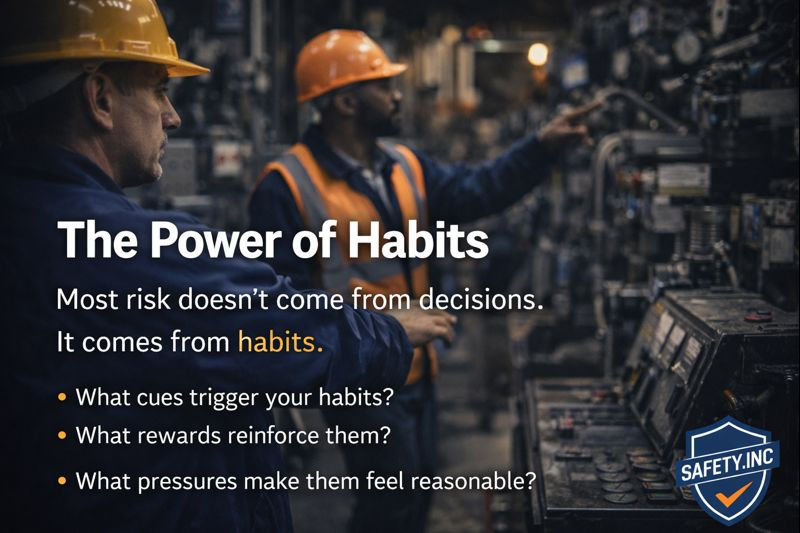
Most risk at work doesn’t come from bad decisions.It comes from decisions people aren’t even aware they’re making.
Because by the time you notice them, they’re already habits.
You Don’t Think Your Way Through Most of the Day - The Power of Habits
Think about your own shift.
You grab the same tools.Walk the same route.Set up equipment the same way.
Not because you decided to — but because your brain is conserving energy.
Habits are how work actually gets done.
Habits Are Built at Work — Not in Training Rooms
Picture a familiar scene:
A technician steps onto the shop floor and immediately reaches for a control panel.A maintenance worker hears a machine cycle and moves without looking.A supervisor sees a delay and says, “Let’s just keep going.”
That moment — the sound, the sight, the pressure — is the cue.
What follows is the routine.
And the reward?Time saved. Less friction. Job done.
No one stops to think, “I’m choosing risk.”The behavior just… happens.
Why “Knowing Better” Rarely Changes Anything
Most safety programs assume that if people know the right procedure, they’ll follow it.
But habits don’t respond to logic.They respond to repetition and reward.
That’s why:
The guard gets bypassed “just this once”
A checklist step quietly disappears
PPE gets skipped when no one’s watching
Not out of defiance.Out of familiarity.
Efficiency feels good — especially under pressure.
Good Habits Are Invisible — Until They Save You
The safest workplaces aren’t safe because people think harder.
They’re safe because the right actions happen automatically.
The worker who locks out without being told.The operator who pauses before restarting.The supervisor who instinctively asks, “What’s changed?”
These aren’t heroic acts.They’re ingrained routines.
And they protect people when stress is high and time is short.
Bad Habits Don’t Look Dangerous — Until It’s Too Late
Here’s the problem:
Unsafe habits feel normal.
They’ve worked before.Nothing bad happened last time.Everyone does it.
So when something finally goes wrong, it looks like a sudden failure.
But it wasn’t sudden.It was well-practiced.
If You Want Safer Work, Change the Cues — Not the Posters
Blaming people for unsafe acts misses the real opportunity.
The better questions are:
What cues are triggering this behavior?
What rewards are quietly reinforcing it?
What pressures make the shortcut feel reasonable?
When you change the environment — how work is set up, paced, and supported — habits change with it.
That’s where lasting safety lives.
Final Thought
If a behavior keeps repeating, it’s not a character issue.
It’s a habit the system taught.
So ask yourself:
What habits is your workplace really training — every single day?
Michael Matthew Mike@SAFETY.INC - Dec 2025


Comments