Walking the Safety Talk
- Michael Matthew
- Dec 29, 2025
- 2 min read
(Why people believe what you do — not what you say)
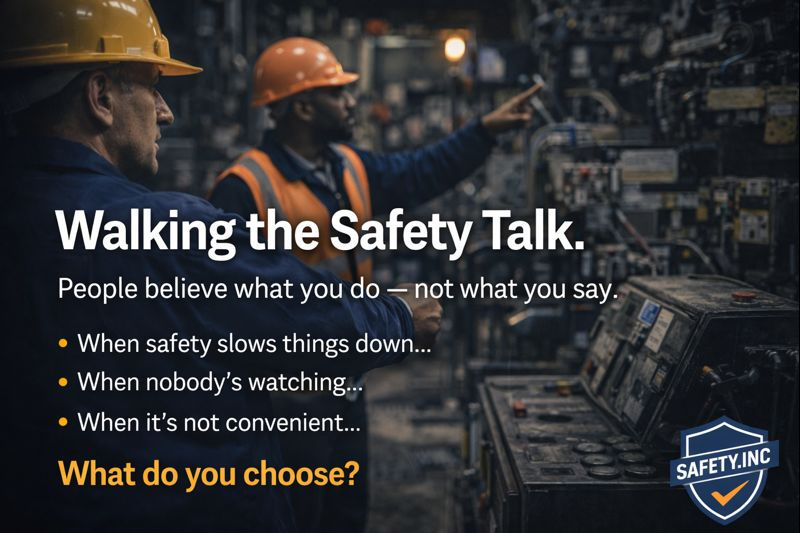
Your safety culture is already visible — even if you never talk about it. It shows up in your decisions.Your reactions.What you tolerate when pressure hits.
People are watching. Always.
Words Don’t Set Culture. Behavior Does.
You can say safety is a priority.You can print it on posters.You can open every meeting with it.
But the moment production slips, equipment fails, or a deadline tightens — your next move tells the real story.
And everyone notices.
The Moment That Defines You
Picture this:
A job is running late.A crew flags a concern.Stopping now means missing a delivery.
You pause.
Do you say, “Let’s push through” — or “Shut it down and fix it”?
That decision will be remembered far longer than anything in your policy manual.
Why Mixed Messages Kill Trust
When leaders talk safety but act differently, people don’t get confused.
They adapt.
They learn when safety matters — and when it doesn’t.They learn which rules are flexible.They learn when it’s safer to stay quiet.
That’s how risk-taking becomes normal — and underreporting becomes survival.
Not because people don’t care.Because they’re responding to the system you’re creating.
Walking the Floor Changes Everything
Think about the last time a leader showed up unannounced on a night shift.
Not for an audit.Not for a checklist.
Just to ask:
“What makes this job harder than it looks?”
“Where do things usually go sideways?”
“What would you change if you could?”
When leaders listen without reacting defensively, people speak honestly.
That’s where real risk shows up.
When Safety Costs Time — What Do You Do?
Here’s another familiar scene:
A piece of equipment isn’t right.The workaround is known.“It’ll only take a minute.”
If you delay the job — reassign resources — miss a target — you send a powerful signal.
You tell people safety isn’t conditional.
If you don’t, they learn exactly how much risk is acceptable.
Presence Signals Priority
Safety meetings without leaders feel optional.Follow-ups that never happen feel pointless.Budgets that never materialize feel dishonest.
But when leaders:
Show up
Ask hard questions
Close the loop
Safety stops being a program and starts becoming how work gets done.
Incidents Reveal Leadership — Not Just Causes
When something goes wrong, people watch closely.
Do leaders look for who failed — or what failed?
Blame shuts people down.Curiosity opens systems up.
Leaders who focus on learning send a clear message:
“We fix problems here. We don’t hide them.”
The Small Stuff Is the Big Stuff
Wearing PPE.Following site rules.Reporting near misses.
When leaders skip steps, others follow.
Not out of disrespect — but consistency.
Standards only exist if they apply to everyone.
Final Thought
People don’t need leaders who talk about safety.
They need leaders whose decisions make safety unavoidable — even when it’s inconvenient.
So ask yourself:
What did your last tough decision teach people about what really matters here?
That answer is your safety culture.
Michael Matthew Mike@SAFETY.INC Dec 2025


Comments