Work-As-Imagined vs. Work-As-Done
- Michael Matthew
- Dec 29, 2025
- 2 min read
(Why perfect compliance breaks down on real job sites)
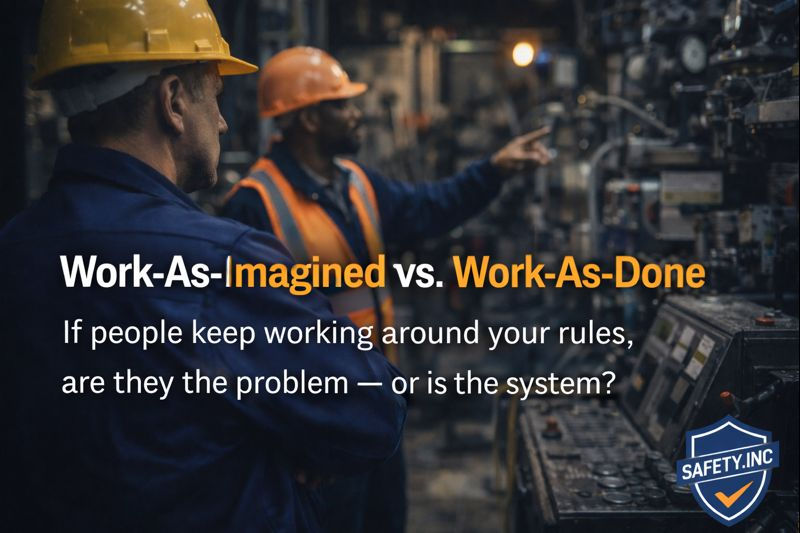
Here’s the uncomfortable truth most organizations avoid:
Work doesn’t fail because people ignore rules.It fails because rules are written for a world that doesn’t exist.
If you’ve ever worked outside a boardroom, you already know this.
The Rulebook vs. the Shift
On paper, the job is clean.
The procedure is clear.The steps are logical.The risks are “controlled.”
Then the shift starts.
Equipment is late.Staffing is tight.The client is watching the clock.Production is already behind.
That’s when rules meet reality.
Nobody Can Follow Everything — All the Time
Think about how many instructions a worker is expected to follow in a single day:
Corporate safety policies
Standard operating procedures
Job-specific work instructions
Permit conditions
Supervisor direction
Now layer on changing conditions, interruptions, and time pressure.
Perfect compliance, minute by minute, isn’t realistic.It never was.
Pressure Changes How Decisions Get Made
Imagine this:
A maintenance task is halfway done.The procedure says stop and reassess.But stopping means shutting down production.And restarting could take hours.
So someone adapts.
Not because they’re careless — but because getting the job done becomes the most visible priority.
In that moment, efficiency feels responsible.Compliance feels theoretical.
People Adapt Because Systems Don’t
Workers aren’t robots.
They’re problem-solvers operating in dynamic environments.
When a rule doesn’t fit the situation — when it slows work unnecessarily, conflicts with another instruction, or ignores site realities — people create workarounds.
Unofficial methods.Local shortcuts.“Ways we’ve always done it.”
These aren’t acts of defiance.They’re signals.
Signals that the system isn’t keeping up with the work.
Deviations Aren’t the Root Cause
Treating every deviation as a personal failure misses the point.
The better question is:
Why was the rule hard to follow here — today — under these conditions?
Often the answers are uncomfortable:
Equipment wasn’t designed for the task
Training didn’t match real conditions
Time estimates were unrealistic
Procedures conflicted with production demands
None of that gets fixed by discipline.
Work-As-Imagined vs. Work-As-Done
Most safety systems are built around how leaders think work happens.
But real safety lives in how work actually unfolds — on night shift, during outages, under pressure.
The gap between those two worlds is where incidents are born.
Closing that gap doesn’t mean removing rules.It means redesigning systems so rules make sense in real life.
The Shift That Actually Improves Safety
When leaders stop asking, “Why didn’t they follow the rule?”…and start asking, “What made this rule hard to follow?”
Something changes.
Procedures improve.Equipment gets redesigned.Supervisors get clearer decision support.Workers become contributors — not liabilities.
That’s how safety becomes resilient.
Final Thought
If people keep working around your rules, they’re not the problem.
The system is telling you something.
Are you listening?
Michael Matthew - Mike@SAFETY.INC Dec 2025


Comments